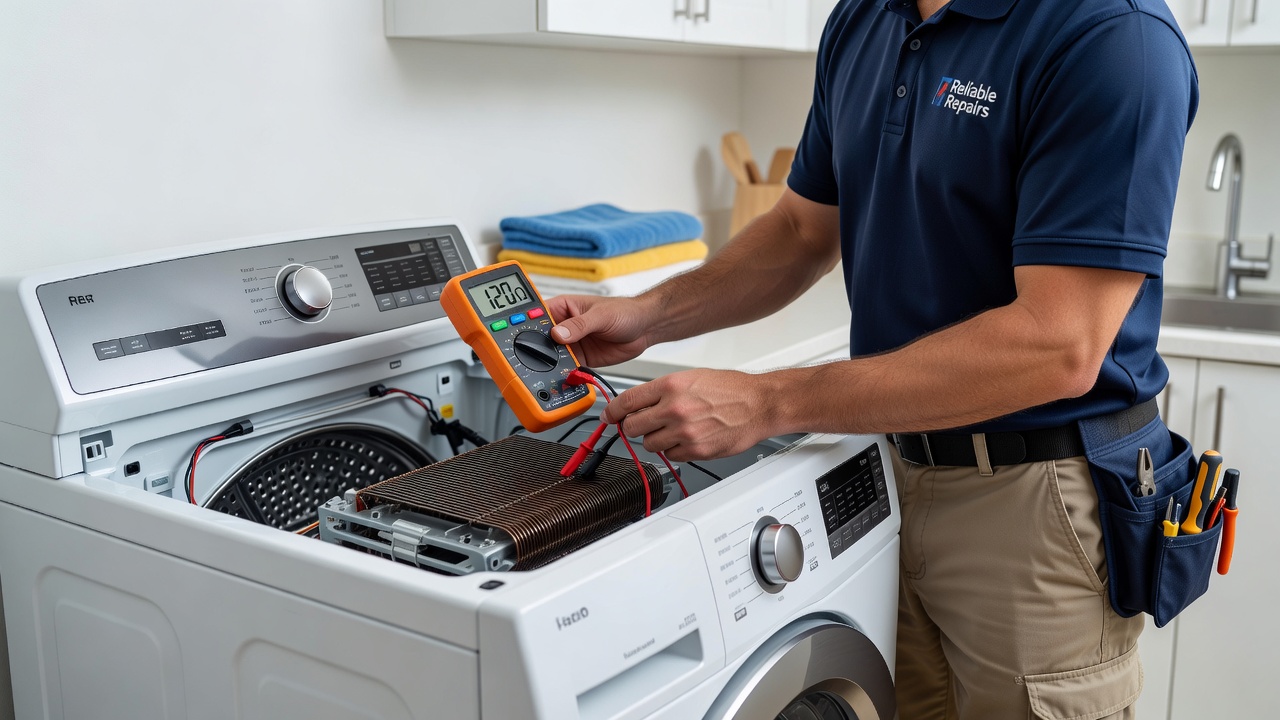
When an electric dryer quits heating, tumbles but never actually dries, or won't start at all, the culprit is almost always electrical — a blown thermal fuse, a tripped thermostat, an open heating element, a dead door switch. You can pay a tech $150–$250 to walk in and tell you which one it is, or you can spend $30–$50 on a multimeter and figure it out yourself in about twenty minutes. The Klein Tools MM325 Digital Multimeter is one of the meters that gets recommended for exactly this kind of job. So after digging into what it does and doesn't do for dryer work, here's my honest take on whether it earns a spot in your toolbox.
 Top pick
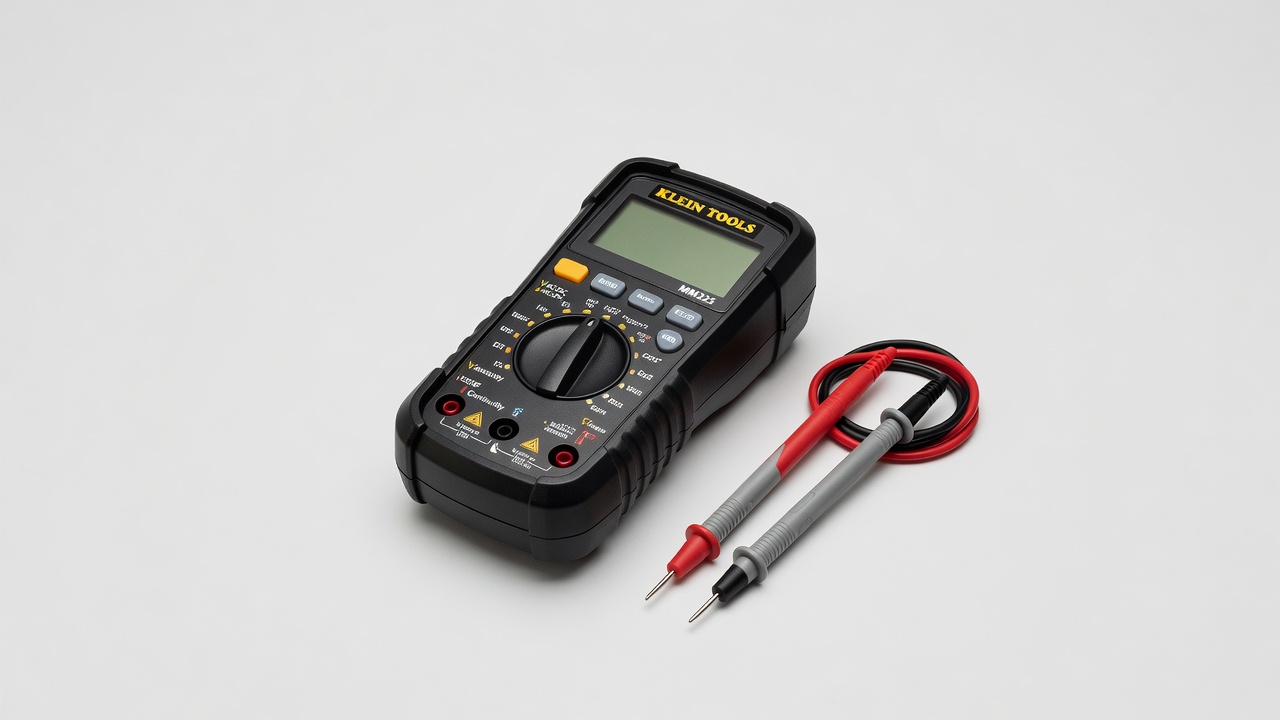
Klein Tools MM325 Digital Multimeter
What we liked
- Useful for continuity and voltage testing
- Trusted tool brand with broad consumer recognition
- Affordable price point for DIY users
- Applies to many appliance and household electrical repairs
Watch-outs
- Requires basic electrical safety knowledge
- Not dryer-specific, so users may need repair guidance
- Commission rate may be relatively low
What the Klein Tools MM325 Actually Is
The MM325 is a compact, entry-level digital multimeter built for homeowners, DIYers, and general electrical troubleshooting. It's not a specialist appliance instrument, and it doesn't pretend to be. What it does measure is exactly what you need to chase down a dryer fault: AC and DC voltage, resistance (ohms), and continuity. That last one is the real workhorse here. A continuity test tells you — with a simple beep or a near-zero ohm reading — whether electricity can actually pass through a part. A thermal fuse, thermostat, or heating element that's failed "open" shows no continuity, and that one reading is usually the whole mystery, solved.
It's a no-frills meter. For dryer work you basically set the dial to continuity or ohms and leave it parked there, so the day-to-day operation is about as simple as it gets. It runs on a standard battery, comes with test leads, and is built to the durability and safety standards Klein has a reputation for among electricians. And that brand trust is honestly part of why the MM325 keeps getting pushed on first-timers — people know the name.
Who It's For
- The DIY homeowner with a dead dryer who wants to confirm a $10 thermal fuse is the problem before ordering the part.
- Anyone doing the occasional household electrical job — testing outlets, checking batteries, tracking down a bad switch. This thing pays for itself all over the house, not just in the laundry room.
- Beginners who'd rather have a trusted brand and a clean, obvious layout than a pile of advanced features they're never going to touch.
What it's not is a dryer-specific, plug-and-play diagnostic box. It's a general tool. You bring the knowledge of where to put the probes; the meter just gives you the number.
Real Pros
- Continuity and voltage cover the vast majority of dryer faults. Blown fuses, open elements, dead thermostats — they all give themselves up on a continuity test. And confirming you've actually got 240V at the outlet rules out the dryer entirely when the real problem was a tripped breaker all along.
- Genuinely cheap. At $30–$50 it costs a fraction of a single service call, and less than a lot of name-brand competitors.
- Useful way beyond the dryer. Unlike some single-purpose gadget, this meter carries over to appliance repair, car checks, outlet testing, battery diagnosis — for years.
- Trusted, durable brand. Klein's gear is built to survive daily abuse on a job site, so occasional home use is well inside its comfort zone.
Honest Cons
- It assumes you know the basics of electrical safety. Dryers run on 240V. You have to unplug the appliance before testing components for continuity, and you need to know better than to go poking around a live 240V circuit. The meter won't stop you from doing something dumb.
- It's not dryer-specific. No wiring diagram, no "test the thermal fuse" mode. You'll want a repair guide or your model's tech sheet to know which terminals to touch.
- A tiny learning curve if you've literally never held a meter. Though dryer work barely stresses it — you're on one or two settings the whole time.
Key Specs at a Glance
The MM325 handles AC/DC voltage, DC current, resistance, and continuity, with an audible continuity beeper and a battery test function — basically the essentials for appliance diagnosis. It ships with test leads and runs on battery power in a housing small enough to pocket. One thing worth doing: because manufacturers update specs, check the exact voltage range, current range, and safety (CAT) rating on the current product listing before you lean on it for any higher-voltage work.
How It Compares
Here's the honest caveat — if your dryer's real problem isn't electrical, a multimeter won't do a thing for you. If the machine heats fine but the clothes come out damp and take three cycles to dry, you've probably got a clogged vent, not a bad component. In that case the Gardus LintEater Dryer Vent Cleaning System is the smarter first buy. A blocked vent is the single most common "my dryer is broken" cause, and a serious fire hazard on top of it. And if you want to actually look inside a duct or behind the drum, an Endoscope Inspection Camera for Appliance Repair pairs nicely with the meter for a more complete DIY kit.
Once the MM325 fingers the failed part, you still have to buy the replacement. RepairClinic Dryer Repair Parts and Diagnostic Resources is a good companion here because it matches parts to your exact model number and has free repair videos — which fills in that "not dryer-specific" gap the meter leaves wide open. And if your diagnosis points straight at a blown fuse, a Whirlpool Dryer Thermal Fuse Replacement Kit (for compatible models) gets you the right part instead of a generic guess and a second order.
Against pricier auto-ranging meters, the MM325 gives up some convenience and a few advanced measurements you won't miss for laundry-room repairs. If your goal is diagnosing a dryer and handling routine home electrical checks, spending more rarely buys you more useful capability.
The Verdict
The Klein Tools MM325 Digital Multimeter earns its solid reputation as a smart, low-cost way into dryer diagnosis. It won't hold your hand — you'll want a repair guide open next to it — but it reliably answers the one question that saves you the most money: which part actually failed? For a DIYer staring at a dead or non-heating electric dryer, it's an easy recommendation. Buy the MM325 to find the fault, lean on RepairClinic to source the exact part, and keep the LintEater around for the vent problem that's pretending to be a broken dryer way more often than people realize.