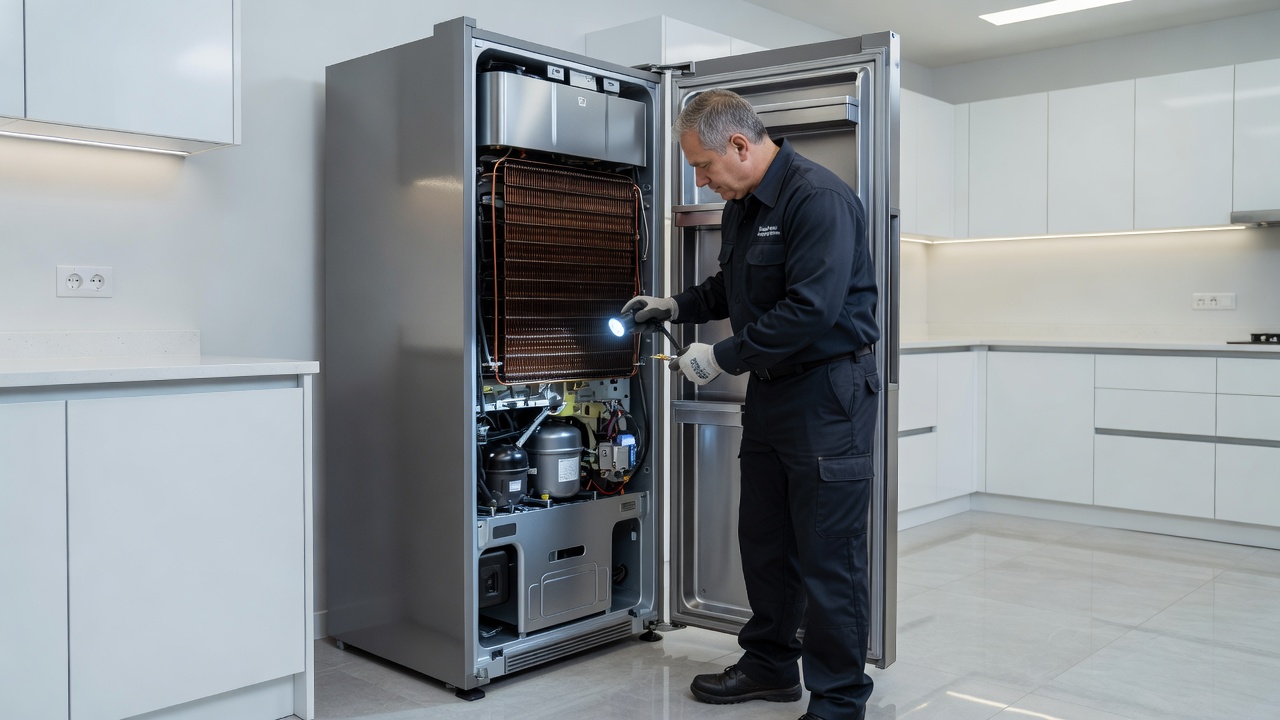
A fridge that clicks, hums, leaks, or slowly warms up usually doesn't mean it's time for a $1,500 replacement. More often than not, one failing part is the whole story — and you can swap it yourself in under an hour, often for less than what a service call costs just to have someone show up. The real trick is knowing which part to buy, and owning the one tool that tells you whether you're right before you spend a dime.
 Top pick
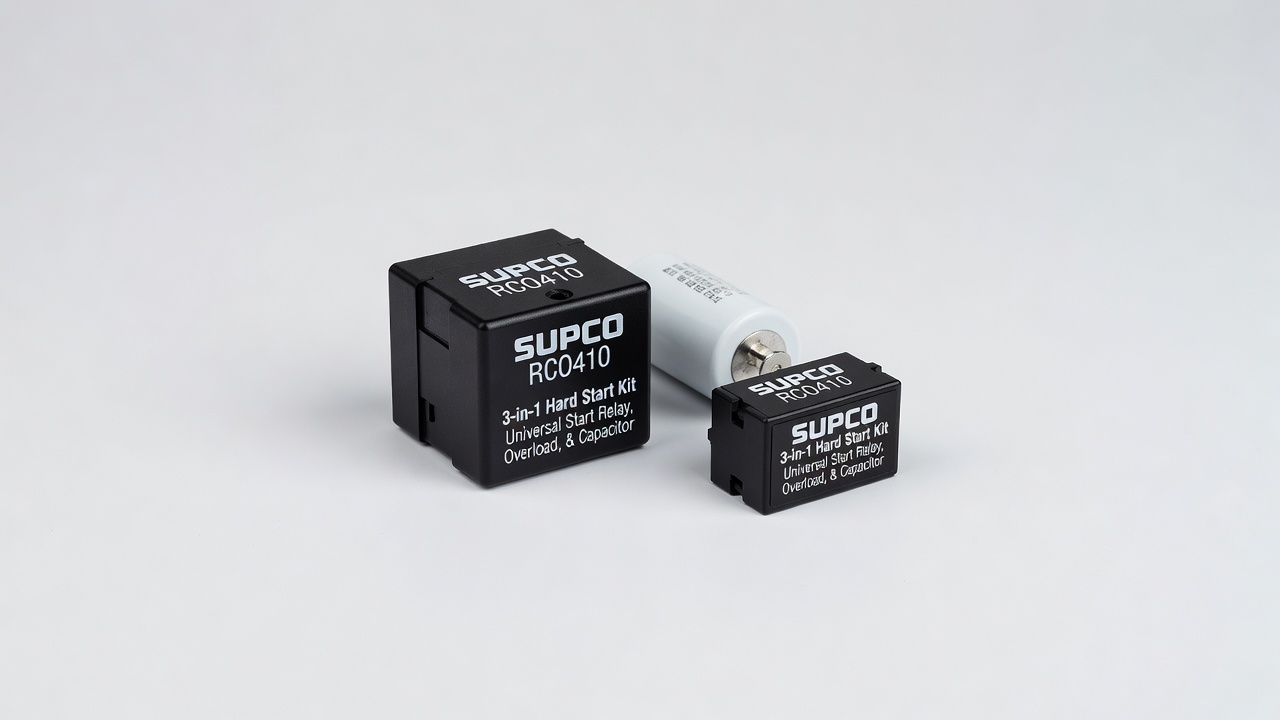
SUPCO RCO410 3-in-1 Hard Start Kit
What we liked
- Low-cost repair product with strong DIY appeal
- Solves a common refrigerator symptom: compressor not starting
- Small, easy-to-ship item with broad model compatibility
- Good add-on product for troubleshooting content
Watch-outs
- Not a guaranteed fix for all compressor issues
- Electrical installation may be unsafe for inexperienced users
- Compatibility and correct diagnosis are important
Below are five of the most genuinely useful refrigerator repair buys of 2026. Some are tools, some are parts, and every one made the list because it fixes a real, common problem — not because it looks impressive in a photo. I've noted who each one is for and, just as importantly, where it lets you down.
1. Klein Tools or Fluke Digital Multimeter — Buy This First
Before you replace anything, you need to know what's actually broken. A Klein Tools or Fluke Digital Multimeter is the most valuable thing on this whole list, because it turns guessing into knowing. With one you can test continuity across a thermostat, check a defrost heater, confirm whether a start relay has died, and verify voltage at the compressor. Swapping parts blind is exactly how people burn $150 and still end up with a warm fridge. A meter is how you skip that mistake.
Who it's for: Anyone who plans to do more than a single repair, or who just wants to diagnose before ordering parts. Klein is great value for a homeowner. Fluke is the professional-grade one that'll outlive you.
Pros: Stops you from buying parts you don't need, works on every appliance in the house instead of just the fridge, and there's a mountain of free tutorials for both brands.
Cons: There's a small learning curve if you've never held one. And you have to respect that a fridge runs on live mains voltage — test with the unit unplugged wherever the procedure allows. At $35 to $130 it's money spent before you've fixed a thing, but it pays for itself the first time it saves you a wrong guess.
2. SUPCO RCO410 3-in-1 Hard Start Kit — Best Fix for a Fridge That Won't Start
If your fridge hums or clicks every few minutes but the compressor never actually kicks on, a failed start relay or capacitor is the usual suspect. The SUPCO RCO410 3-in-1 Hard Start Kit rolls a universal start relay, an overload protector, and a start capacitor into one cheap package, which is why both weekend DIYers and working techs keep it around for triage.
Who it's for: Someone whose compressor won't start and who wants a cheap way to figure out whether the relay — and not the much pricier compressor — is the problem. If the fridge runs after you install the kit, you just dodged a major repair.
Pros: Dirt cheap at $12 to $25, the universal design fits a wide range of compressors, and it's a fantastic way to confirm a relay failure.
Cons: It's a workaround, not a precision OEM match. A hard start kit makes the compressor work harder, so treat it as a diagnostic or a stopgap rather than a forever fix on a healthy system. If the compressor itself is seized, the kit does nothing — which is the whole reason you pair it with the multimeter above. Wire it exactly per the kit's diagram; that part isn't optional.
3. Refrigerator Door Gasket Replacement — Best Fix for Warm Temps and Frost
A cracked, torn, or hardened door seal is one of the most overlooked reasons a fridge runs constantly, builds frost, sweats condensation, or quietly jacks up your power bill. The Refrigerator Door Gasket Replacement is the magnetic seal that keeps the cold in — and when it goes, the compressor just runs and runs trying to make up the difference.
Who it's for: Anyone whose door doesn't "grab" shut like it used to, who sees moisture along the door edge, or whose fridge feels warm even though the compressor is clearly working. There's a quick dollar-bill test for this: close the door on a bill and see how easily it slides out. If it slides free, your seal's weak.
Pros: Goes straight at a common efficiency problem, a fresh gasket can noticeably cut runtime and energy use, and it's usually a screwdriver-and-patience job with zero electrical work.
Cons: Gaskets are model-specific, so you have to match your exact model number ($35 to $120 depending on brand and size). They also ship folded and love to hold creases — let the new one warm up to room temperature and gently work out the kinks, and it fits so much easier.
4. Refrigerator Ice Maker Replacement Assembly — Best Fix for No Ice or Bad Cubes
When a fridge quits making ice, floods the tray, or spits out hollow or misshapen cubes, the ice maker module itself is often the culprit. A Refrigerator Ice Maker Replacement Assembly swaps the whole unit at once, which is usually simpler and more reliable than trying to rebuild the little bits inside.
Who it's for: Owners of Whirlpool, Frigidaire, Samsung, LG, or GE units who've already ruled out the cheap stuff — a frozen fill tube, a closed water shutoff, or a clogged filter (that's next on the list). Confirm the water supply actually works before you decide the assembly is dead.
Pros: A complete assembly brings back full function in one part, plenty of models use plug-and-mount designs that take 20 to 30 minutes, and brand availability is wide.
Cons: Price swings a lot ($50 to $180) and it's very model-dependent, so ordering the exact assembly for your model number is essential — the wrong part is far and away the biggest reason these get returned. And spend the five minutes ruling out a frozen water line first, because that one costs nothing to fix.
5. Everydrop by Whirlpool Refrigerator Water Filter — Best Routine Maintenance Buy
Not everything here is a repair. Some of it just keeps you from needing one. The Everydrop by Whirlpool Refrigerator Water Filter is the OEM-style replacement for a lot of Whirlpool, Maytag, KitchenAid, JennAir, and Amana fridges, and a neglected filter is a quiet cause of slow dispensers, off-tasting water, and a struggling ice maker.
Who it's for: Anyone with a compatible fridge who hasn't swapped the filter in the last six months. Most manufacturers suggest changing it roughly twice a year, and it's the cheapest bit of maintenance that protects the pricier parts downstream.
Pros: Genuine-style fit and steady performance ($45 to $70), a simple twist-in install with no tools, better-tasting water, and a happier ice maker.
Cons: It's pricier than the third-party knockoffs, though those trade certified, reliable fit for the savings. You do have to match the right Everydrop number to your model. And remember it's maintenance, not a cure — it won't bring a fridge that's already failed back to life.
How to Choose the Right Part
Work from symptom to solution, and diagnose before you buy:
- Fridge hums or clicks but won't cool: Suspect the start relay — test it with a multimeter, then try the SUPCO RCO410 hard start kit.
- Runs constantly, frost, or condensation: Check the door seal first; a Door Gasket Replacement is the fix.
- No ice or bad cubes: Rule out a frozen line and a clogged filter, then look at the Ice Maker Replacement Assembly.
- Slow water or bad taste: Replace the Everydrop water filter — cheap, routine, and preventive.
Two habits save the most money here. First, always match your exact model number — gaskets, ice makers, and filters are all model-specific, and the wrong part is the number-one reason a repair fails. Second, own a multimeter before you spend on parts. Diagnosing a $15 relay failure keeps you from replacing a $200 compressor you never needed to touch.
The Verdict
Buy one thing? Make it the Klein Tools or Fluke Digital Multimeter. It's the tool that makes every other repair on this list accurate instead of hopeful. For a compressor that won't start, the SUPCO RCO410 Hard Start Kit is the cheapest way to confirm the fault and maybe fix it on the spot. For a fridge that can't hold temperature, start with the Door Gasket Replacement before you assume anything worse. Match an Ice Maker Replacement Assembly to your model when the ice quits, and keep an Everydrop Water Filter on a six-month schedule so the small stuff never grows into the big stuff.
Between them, these five cover the large majority of common refrigerator failures — and for well under the price of one professional service call, they turn "I need a repairman" into "I fixed it myself this afternoon."
Always unplug your refrigerator before servicing any electrical components, and call a qualified appliance technician if you're unsure about a repair involving mains voltage or a sealed refrigerant system.