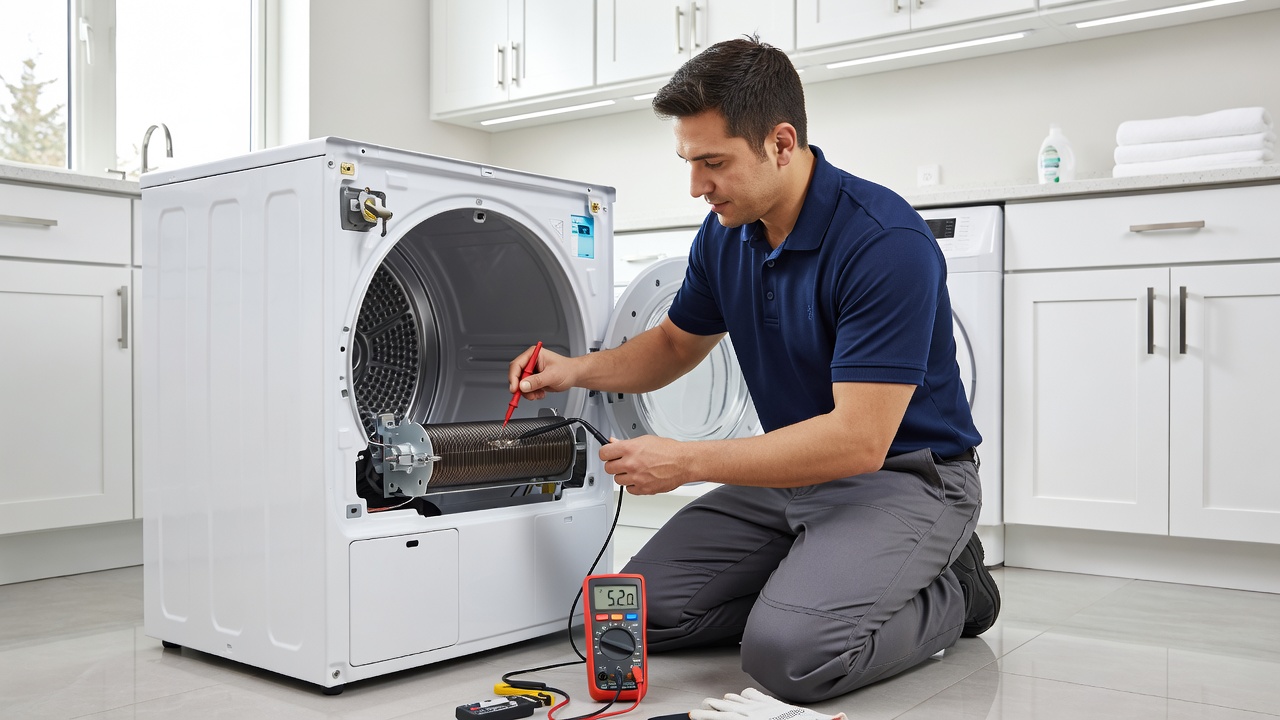
When a dryer quits heating, won't start, or takes three cycles to dry one load of towels, the repair itself is rarely the hard part. Figuring out what's actually broken before you throw money at parts — that's the part that trips people up. Good news: most dryer faults are diagnosable at home with a few cheap tools and the right reference material. You don't need to be an appliance tech. You need continuity readings, a clear look inside the vent, and a way to match symptoms to the correct part.
 Top pick
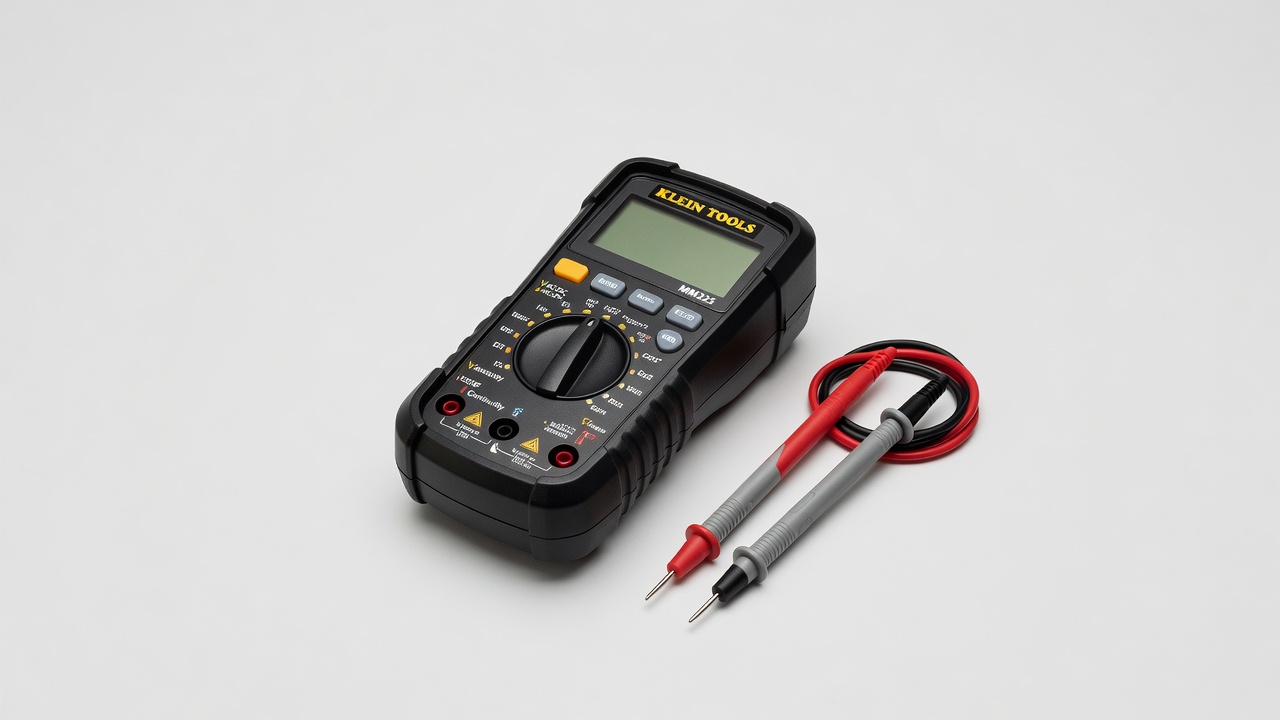
Klein Tools MM325 Digital Multimeter
What we liked
- Useful for continuity and voltage testing
- Trusted tool brand with broad consumer recognition
- Affordable price point for DIY users
- Applies to many appliance and household electrical repairs
Watch-outs
- Requires basic electrical safety knowledge
- Not dryer-specific, so users may need repair guidance
- Commission rate may be relatively low
Below are five picks that cover the real diagnostic path — testing electrical components, confirming airflow, seeing into tight spaces, and ordering the exact part your model needs. I've ranked them by how much diagnostic value the average homeowner gets per dollar.
1. Klein Tools MM325 Digital Multimeter — Best Overall Diagnostic Tool
If you buy only one thing on this list, make it a multimeter. The Klein Tools MM325 is an affordable, reliable digital meter that handles the single most useful dryer test: continuity. Almost every "not heating" or "won't start" fault traces back to a component that's failed open — a blown thermal fuse, a bad thermostat, a burned-out heating element — and a continuity check tells you in seconds whether current can actually pass through it.
Who it's for: Homeowners and DIYers troubleshooting electric dryers who want a definite answer instead of guessing. Set it to continuity or resistance, touch the probes to a component's terminals, and a reading of "open" (or no beep) means that part is dead. Simple as that.
- Pros: Cheap, easy to read, and it measures the AC/DC voltage, resistance, and continuity you actually need for dryer work. Klein's a trusted name in electrical tools.
- Cons: It's an entry-level meter — no true-RMS, no capacitance, none of the fancy stuff. And you'll need to unplug the dryer and get at the components, so some comfort with a screwdriver is assumed.
Verdict: The highest-leverage buy here. It pays for itself the first time it stops you from ordering the wrong part.
2. RepairClinic Dryer Repair Parts and Diagnostic Resources — Best for Symptom-to-Part Matching
A multimeter tells you a part is bad. RepairClinic tells you which part to suspect and where it lives in your specific machine. Punch in your dryer's model number and you get model-based troubleshooting guides plus the exact replacement parts that fit — so you're not squinting at some generic diagram hoping it matches.
Who it's for: Anyone typing "dryer not heating," "dryer won't start," or "dryer squeaking" into a search bar who wants a structured diagnosis path instead of a ten-year-old forum thread. It's especially handy because it ties the symptom straight to the part you'll end up ordering.
- Pros: Model-specific guidance, a wide parts catalog (a few bucks for small components up to a couple hundred for major assemblies), and repair videos that genuinely cut down on wrong-part orders.
- Cons: It's a parts-and-info source, not a physical tool — you still need a meter to confirm the diagnosis. Pricing swings a lot depending on the part.
Verdict: Use it alongside the multimeter. The meter confirms the fault, RepairClinic gets you the right model-matched replacement.
3. Gardus LintEater Dryer Vent Cleaning System — Best for Long Dry Times and Overheating
Here's the diagnosis most people skip entirely: a huge share of "my dryer isn't working" complaints aren't electrical at all. They're airflow. Lint packs into the duct, traps heat and moisture, and now your clothes stay damp, cycles drag on, and the dryer overheats — which, ironically, is exactly what blows those thermal fuses in the first place. The Gardus LintEater is a rod-and-brush kit that reaches deep into the vent run and clears that buildup.
Who it's for: Anyone whose dryer runs but dries slowly, feels hot to the touch, or shuts off mid-cycle. If your vent hasn't been cleaned in a year or more, do this before you replace a single part.
- Pros: Tackles one of the most common root causes; the flexible rods snake around bends in the ductwork; most kits attach to a drill so you're not doing it by hand. It's a real fire-safety win too, since lint buildup is a leading cause of dryer fires.
- Cons: It's maintenance, not fault-finding — it won't do a thing for a truly dead dryer. And cleaning a long or rooftop vent run gets messy.
Verdict: An easy win. Rule out airflow before you go ruling in a broken component.
4. Whirlpool Dryer Thermal Fuse Replacement Kit — Best First Part to Have on Hand
The thermal fuse is a one-time safety device. When a dryer overheats — usually from a clogged vent — the fuse sacrifices itself and cuts power to the heat, the motor, or both, depending on the model. That makes it one of the most commonly replaced dryer parts, period. A Whirlpool-compatible thermal fuse kit is cheap and heavily searched, partly because Whirlpool, Kenmore, Maytag, and Amana dryers often share the same component families.
Who it's for: Owners of Whirlpool-family dryers whose meter reads "open" on the thermal fuse, or who've just cleared a clogged vent and need to replace the part that clog killed.
- Pros: Very cheap, easy to swap, and it fixes a genuinely common no-heat/no-start fault. Broad cross-brand compatibility within the Whirlpool family.
- Cons: Always check the exact part number against your model — "compatible" isn't the same as universal. And here's the thing: a blown fuse is a symptom. If you don't fix the airflow problem that caused it, the shiny new fuse will blow right back out.
Verdict: A smart part to keep in the drawer — but only install it after your meter confirms the fuse is bad and you've cleared any vent restriction.
5. Endoscope Inspection Camera for Appliance Repair — Best for Seeing the Unseeable
Some problems hide where you just can't see them. A lint clog buried deep in the duct, a sock that dropped behind the drum, a cracked vent hose, a frayed belt. An endoscope inspection camera — basically a small waterproof camera on a bendy cable — lets you look inside vents and behind the machine without tearing the whole thing apart.
Who it's for: DIYers taking on the trickier airflow and mechanical issues, or anyone who wants to confirm a duct is actually clear after cleaning it.
- Pros: Turns guesswork into an actual picture, saves you a bunch of disassembly, and it's useful well beyond the dryer for other inspection jobs around the house.
- Cons: The most specialized (and least essential) pick here. Cheaper cameras have so-so image quality and weak lighting, and it only helps with mechanical and airflow issues — it won't tell you anything about an electrical fault.
Verdict: A nice-to-have that earns its spot once you've covered the electrical and airflow basics.
How to Choose the Right Diagnostic Tools
Match the tool to your symptom instead of buying everything at once:
- Dryer runs but won't heat, or won't start at all: Start with the Klein MM325 multimeter to test the thermal fuse, thermostats, and heating element for continuity, then use RepairClinic to source the failed part by model number.
- Dryer heats but dries slowly or overheats: Almost always airflow. Grab the Gardus LintEater first, and use the endoscope camera to confirm the duct is clear.
- You own a Whirlpool-family dryer: Keep a thermal fuse kit on hand — but treat a blown fuse as a flag to go fix the airflow problem underneath it.
The order matters here. Confirm airflow, then test the electrical components, then buy the model-specific part. Doing it backwards — buying parts on a hunch — is exactly how people spend $80 fixing a $0 vent clog.
Quick Verdict
For most people, the Klein Tools MM325 Digital Multimeter plus a Gardus LintEater vent kit will diagnose the overwhelming majority of dryer problems between the two of them — one handles electrical faults, the other handles airflow. Add RepairClinic to order the exact part your model needs, keep a Whirlpool thermal fuse kit in the drawer if you've got a compatible machine, and pick up an endoscope inspection camera once you want eyes inside the ducts you're clearing. Work through it in that order and you'll fix the dryer without paying for a service call — or worse, the wrong part.